

How crackers were born by happy accident

Did you know that the holes in a cracker are not actually decoration? Before the crackers are sent into the oven, they are pierced with a fork or a special stick so that steam escapes through the holes. It is thanks to these holes that the cracker remains a cracker with the familiar crunch. Let's talk about the history of this delicious snack.
An early predecessor to the cracker was made back in 1792 in Newburyport, Massachusetts, by baker John Pearson, who intended to make a special kind of cookie with a longer shelf life than the usual matronly ones. The new cookie was called Pearson's Pilot Bread. They had a simple composition, contained only flour and water, and were especially popular with sailors.
The first crackers were made in England in 1801 by baker Josiah Bent. (According to other sources, an apprentice baker). He was making galettes (dry cookies or dense breadcrumbs). But got distracted, didn't keep track of them in the oven. Freshly baked cookies crumbled in his hands, producing a specific crunch. (In English -crack). That's why the new cookies were called crackers.
The next time, Bent made small holes in the dough with a fork and purposefully baked them to a crisp. The customers liked the dish. The crackers were very popular with the sailors. They were eaten with fish soup.
In 1810, saltine crackers - the forerunner of saltine crackers - appeared, which had a better taste compared to the original version. Bent's cracker business flourished. Even today you can buy crackers made by the company that Josiah Bent's grandson founded.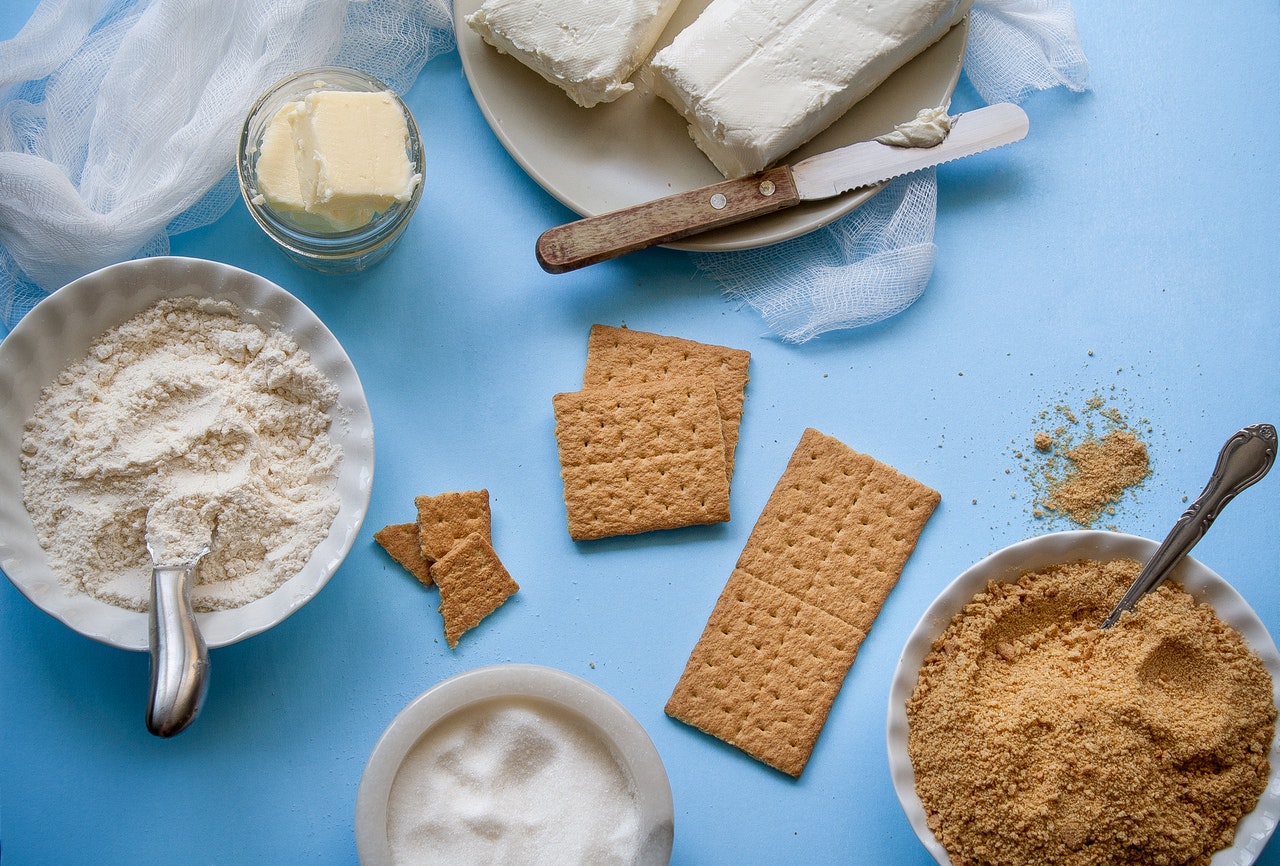
In 1829, Graham's crackers appeared. Reverend Sylvester Graham was an American preacher and dietary reformer who preached sobriety and vegetarianism. Graham decided to come up with a healthy menu that excluded meat, alcoholic beverages, and sugar, but had plenty of whole grains, vegetables, and fruits. Graham saw the consumption of coarse and unleavened foods as an escape from carnal pleasures, which, according to Graham, were the source of many diseases. Graham used bran, wheat germ and whole wheat flour to make crackers.
However, consumers initially did not appreciate the taste of these crackers - too they turned out to be tasteless. But the cookies turned out very tasty when they added the missing ingredient, sugar, to the priest's recipe. No one knows how Sylvester Graham himself would have felt about the innovation. He did not live to see an improved version of his crackers.
In 1876, the first salted crackers appeared. However, they became popular only during the Great Depression. Saltine crackers served as a cheap and tasty filling, which was willingly added to other foods to make them more filling.
Incidentally, the U.S. originally wanted to make thirteen holes on crackers - the number of the first states united in the United States, but manufacturers quickly abandoned the idea.
Nowadays, crackers are part of military rations. Crackers are also used to make cakes and pie bases. Crackers serve as an excellent snack, and can be eaten in moderation while dieting. They are great for satisfying hunger and also have a long shelf life, so they are great for long trips.

You must be logged in to post a comment.