
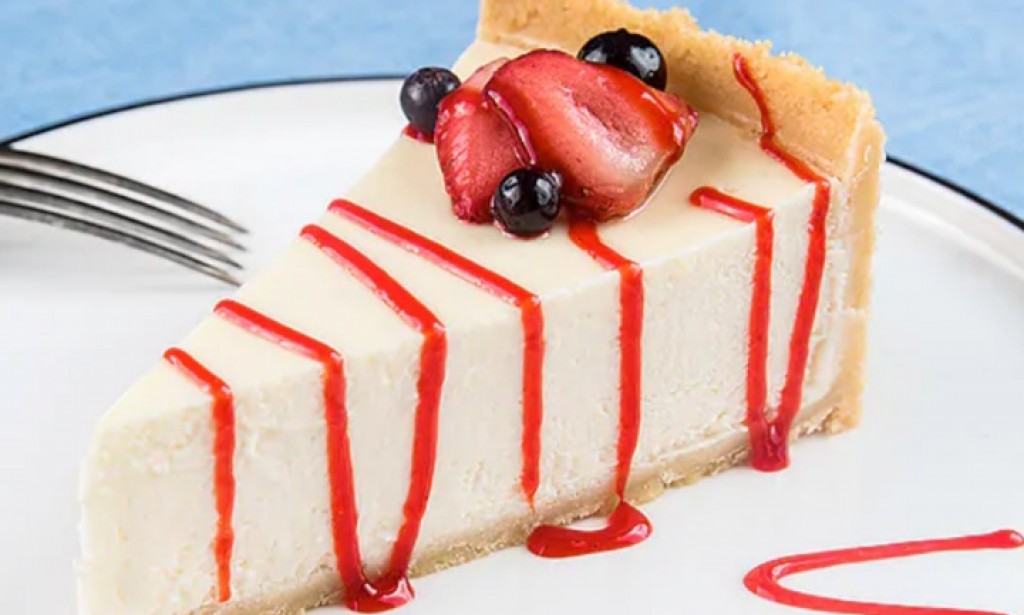
Dear Friends, The hardest part of making cheesecake is finding the right cottage cheese (cream cheese). Authentic recipes use Philadelphia cheese. No melted cheeses, cottage cheese, sour cream, or mascarpone are suitable. All the more so Creme Bonjour and other unhealthy pseudo cheeses.
Total cooking time cheesecake: 10-12 hours (including its "maturation" in the fridge!)
Ingredients
- Cookies for baking 300 g
- 100 g butter
- 600 grams of cream cheese
- 150 g sugar
- 3 eggs
- cream 30-35% 200 ml
You can use 20% cream or even 10% cream instead of heavy cream, but it will reduce the creamy flavor a bit.
The amount of ingredients is calculated for baking in a form with a diameter of 20-22 cm, for a 26 cm form the number of ingredients increase by 1.5-2 times, unless, of course, you like low cheesecake. I will write for those who are too lazy to count:
1.shortbread cookies 500 g
2.butter 166 g
3.cream cheese 1 kg
4.sugar 250 g
5.eggs
6.cream 30-35% 333 ml
Cooking
Prepare all the necessary ingredients for the cheesecake New York. Take the eggs (3 pieces), cheese (600 g), cream (200 ml) and butter (100 g) from the refrigerator in advance, half an hour before cooking and leave them to "warm up" to room temperature.
In about 30 minutes we take the base - the sand layer. For this we take any kind of shortbread (300 g), as you like. Light, dark, with nuts - anything. I used a child's cookie, it has butter, not margarine. It's a small thing, but it's nice. You can make your own: classic shortbread cookies or shortbread cookies with vegetable oil.
Prepare the base. To do this, you need to grind the cookies into crumbs. The easiest ways are a blender (chopper) or a food processor. The method is a little more complicated: crumble and roll with a rolling pin the cookies put in a bag.
At this point, our butter has melted on its own, has become malleable, and is ready for further work. I do not recommend melting the butter, as it spreads in the sandy crumbs in the form of droplets, does not hold well and will leak when baking. Combine the crumbs and butter. It should be a loose mass.
Pour our billet into a mold. It is best to use a mold, I have a diameter of 24 cm. Crush an even layer with something flat, like the bottom of an aluminum mug. You can do it with rims, you can do it without, I like the cheesecake with a rim. You can adjust the height of the rims yourself. After making the base, place it in the oven preheated to 180-200 degrees Celsius for 5-10 minutes. After that, take out of the oven, slightly smooth the walls and bottom and leave to cool.
Now the cheesecake itself. Stir well the cottage cheese / cream cheese with sugar (150 g) until homogeneous. The easiest way to do this is with a mixer. But! We only need to mix evenly, not whip! So do everything on minimum speed, otherwise bubbles will appear and our cheesecake will look like a holey cheese.
One at a time add the eggs. Stir the mass very well after each introduction of the egg. Take your time. Try not to whip the mixture too much - if the mixture is oversaturated with air bubbles, the cheesecake may bloat and crack when baked. So now work not with a mixer, but with a spatula or a whisk.
And at the very end, add the cream (there is no need to whip it) and stir it gently again. Tap the container on the table a couple of times, let the maximum number of air bubbles that are inside the mass come out. The cheesecake itself may have different consistencies: from liquid fluid to quite thick like sour cream. Reasons: different density and moisture content of cheese, as well as the category of eggs.
Pour the filling into the mold with the base and spread it gently and evenly over the entire area. Lightly tap the mold against the table a couple of times (this way we avoid bubbles and heterogeneity of the dough, because those bubbles that are close to the upper edge of the cheesecake will come out).
Next we will bake the cheesecake. Here we have to deviate a little bit into the theoretical part, but it's worth it. Baking cheesecake means stabilizing the cheesecake mass, that is, compacting it so that it holds its shape when it is cut. This is actually what the eggs are for. In all sorts of recipes on the Internet suggests wrapping the form in foil, pouring water into the tray and baking in a water bath. This is done in order to evenly distribute the temperature inside the oven, so that the cheesecake will not rise too much and not crack. But all we end up with is a soggy base and the complexity of preparation. We'll bake this way: first we put it in a preheated 200°C oven for 10 minutes, and then we turn the temperature down to 110°C and bring the cheesecake to about an hour. It all depends on certain features, such as the diameter of your mold. Here's how to orient yourself - the center of the cheesecake should shake slightly (if you move the mold), but not be too runny. It took me 10 minutes + 1 hour to bake the cheesecake in a 24 cm mold. I usually put the tray a little closer to the bottom of the oven. If you are afraid that the top of your cheesecake will burn, then prepare a sheet of foil in advance to cover the top of the mold in case of emergency. Cheesecake likes to be watched while it's in the oven, this is important don't neglect it. You don't have to watch it all the time, but every 10-15 minutes you should look through the glass to see how the cheesecake is doing. If near the end of cooking the top of the cheesecake began to lift and crack, then this is a clear sign of overbaking, that is, the cheesecake has been overcooked.
So, the cheesecake in the oven seems to have baked. But that's not all. It's important to refrigerate the cheesecake properly. If you take it out of the oven quickly, it's bound to crack from the sudden change in temperature. And why would we want a cracked cheesecake?! The cheesecake needs to be cooled in several steps. Immediately after turning off the oven, leave it in the oven for 40-60 minutes, then ajar the oven door and leave it for another 30 minutes. Then we take out the cheesecake and leave it to cool down at room temperature for 1 hour. Then you need to run a knife along the walls of the form, and after that put it in the refrigerator. Gradual cooling greatly reduces the risk of cracks in the dessert!
The New York cheesecake is very delicate and homogeneous. It has the texture of a very delicate curd mixture. For full flavor, the cheesecake should stay in the refrigerator for at least 6-8 hours, I always leave it overnight and the morning will be happier with a great dessert for coffee. It's also a workout for willpower, again. The cheesecake peaks in flavor on the third day, it's no joke. You have to assume that once you turn off the oven, the cheesecake-making process is not over. When refrigerated and in the refrigerator, the cheesecake continues to "cook," but in a slightly different sense from what we are used to.

You must be logged in to post a comment.