
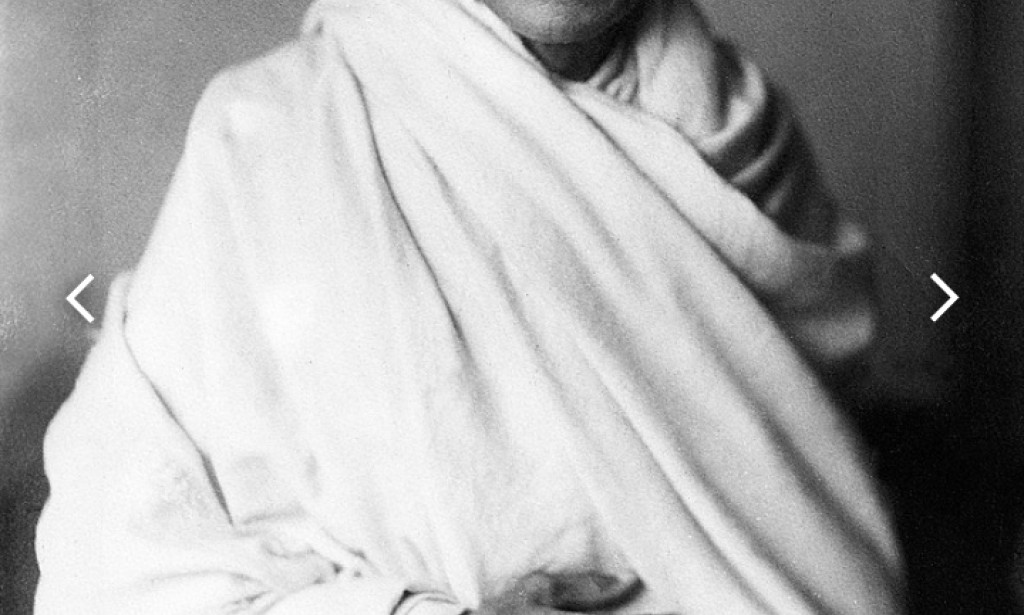
Mohandas Karamchand Gandhi[a] (2 October 1869 – 30 January 1948) was an Indian lawyer,[3] anti-colonial nationalist[4] and political ethicist[5] who employed nonviolent resistance to lead the successful campaign for India's independence from British rule,[6] and was to inspire movements for independence and civil rights across the world. The honorific Mahātmā (Sanskrit: "great-souled", "venerable"), first applied to him in 1914 in South Africa, is now used throughout the world.
Mahātmā
Gandhi
Mahatma-Gandhi, studio, 1931.jpg
Gandhi in London, 1931
Born
Mohandas Karamchand Gandhi
2 October 1869
Porbandar, Porbandar State, Kathiawar Agency, British Raj
Died
30 January 1948 (aged 78)
New Delhi, India
Cause of death
Assassination (gunshot wounds)
Monuments
Raj Ghat
Gandhi Smriti
Citizenship
British Raj (1869–1947)
Dominion of India (1947–1948)
Alma mater
Alfred High School, Rajkot (1880 – November 1887)
Samaldas Arts College, Bhavnagar (January 1888 – July 1888)
Inner Temple, London (September 1888–1891)
(Informal auditing student at University College, London between 1888 and 1891)
Occupation
Lawyeranti-colonialistpolitical ethicist
Years active
1893–1948
Era
British Raj
Known for
Leadership of the campaign for India's independence from British rule,
Nonviolent resistance
Notable work
The Story of My Experiments with Truth
Office
43rd President of the Indian National Congress
Term
1924
Predecessor
Abul Kalam Azad
Successor
Sarojini Naidu
Political party
Indian National Congress (1920–1934)[1]
Movement
Indian independence movement
Spouse(s)
Kasturba Gandhi
(m. 1883; died 1944)
Children
HarilalManilalRamdasDevdas
Parents
Karamchand Gandhi (father)
Putlibai Gandhi (mother)
Relatives
C. Rajagopalachari (father-in-law of Devdas Gandhi)
Signature
Signature of Gandhi
Born and raised in a Hindu family in coastal Gujarat, Gandhi trained in the law at the Inner Temple, London, and was called to the bar at age 22 in June 1891. After two uncertain years in India, where he was unable to start a successful law practice, he moved to South Africa in 1893 to represent an Indian merchant in a lawsuit. He went on to live in South Africa for 21 years. It was here that Gandhi raised a family and first employed nonviolent resistance in a campaign for civil rights. In 1915, aged 45, he returned to India. He set about organising peasants, farmers, and urban labourers to protest against excessive land-tax and discrimination. Assuming leadership of the Indian National Congress in 1921,.

You must be logged in to post a comment.