

The Future of Immortality: Are Humans About to Stop Dying Naturally?
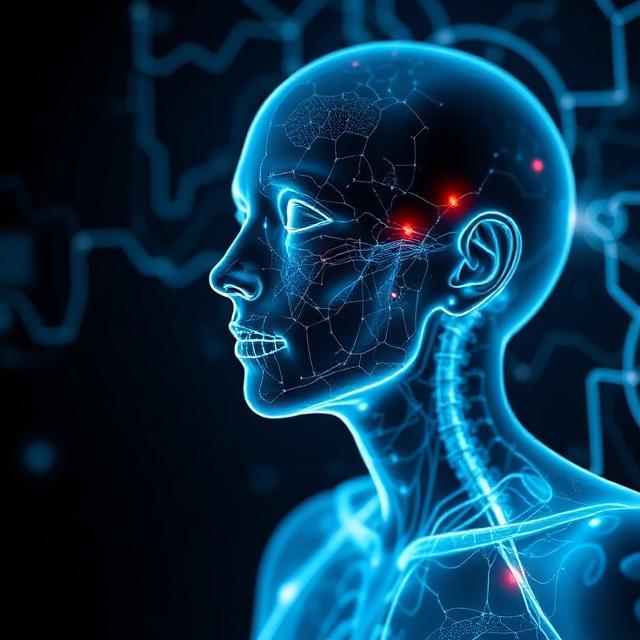
Humanity has always dreamed of escaping death. From ancient myths to cutting-edge laboratories, the desire to live longer—and maybe forever—has shaped culture, religion, and science. Today, breakthroughs in biotechnology, artificial intelligence, and regenerative medicine are making “biological immortality” feel less like science fiction and more like a serious scientific question.
But are humans really on the verge of stopping natural death? Or are we just getting better at delaying it?
This in-depth guide explores where immortality research stands today, what technologies might extend human life dramatically, the risks and ethical dilemmas, and what the future may actually look like.
H2: What Does “Immortality” Really Mean?
Immortality doesn’t mean what most people think it means.
H3: Biological Immortality vs. Practical Immortality
Biological immortality does not mean:
You can’t be injured
You can’t die in accidents
You can’t be killed
Instead, it means:
Your body does not deteriorate due to aging
You don’t die from age-related diseases
Your cells continue functioning indefinitely
Practical immortality refers to the idea that:
Aging can be slowed or reversed
Lifespans may extend to hundreds of years
Death becomes rare, not inevitable
H3: Why Humans Age in the First Place
Aging happens because:
Cells accumulate damage
DNA mutations build up
Telomeres shorten
Stem cell regeneration slows
Organs lose efficiency
In short, the body is not designed for infinite maintenance. But science is now trying to change that.
H2: The Current State of Human Longevity
We are already living longer than any generation before us.
H3: How Long Do Humans Live Today?
Modern lifespan improvements come from:
Vaccines
Antibiotics
Sanitation
Better nutrition
Medical technology
Average global life expectancy now exceeds 70 years, with many countries reaching 80+.
But longer life does not mean healthier aging.
H3: The Rise of Age-Related Diseases
As people live longer, they face:
Heart disease
Cancer
Alzheimer’s
Parkinson’s
Osteoporosis
Frailty
This has shifted research focus from “living longer” to living longer without decline.
H2: Key Technologies Driving Immortality Research
Several scientific fields are converging to challenge aging itself.
H3: Genetic Engineering and DNA Repair
Scientists are learning how to:
Edit genes linked to aging
Repair DNA damage
Enhance cellular resilience
Activate longevity-related genes
CRISPR technology is accelerating gene therapy research aimed at preventing degenerative diseases.
H3: Telomere Extension and Cellular Aging
Telomeres act like protective caps on DNA. When they shorten:
Cells stop dividing
Tissues weaken
Aging accelerates
Researchers are exploring:
Telomerase activation
Telomere repair therapies
Cellular rejuvenation techniques
If telomere loss can be slowed or reversed, aging itself could be delayed.
H3: Regenerative Medicine and Stem Cells
Stem cell therapy aims to:
Replace damaged tissues
Regrow organs
Repair nerve damage
Restore function to aging systems
Potential future applications include:
Growing replacement organs
Reversing spinal injuries
Rebuilding failing hearts
H3: Artificial Intelligence in Longevity Science
AI helps researchers:
Discover new drugs
Analyze genetic data
Predict disease risks
Simulate biological aging
Companies like are accelerating medical research by modeling complex biological systems faster than human scientists ever could.
H2: Anti-Aging Research and Breakthrough Theories
Scientists are no longer treating aging as unavoidable. They are treating it as a disease.
H3: The Longevity Escape Velocity Theory
Popularized by , this theory suggests:
Medical technology will improve faster than we age
Each year of life gives us more years of extended life
Eventually, aging may be outpaced entirely
In simple terms:
If science adds more years to your life than you lose to aging each year, death by aging becomes optional.
H3: The Role of Longevity-Focused Organizations
Groups like focus on:
Repairing cellular damage
Clearing senescent cells
Restoring mitochondrial function
Preventing age-related degeneration
Their approach treats aging as an engineering problem, not a mystery of fate.
H2: Can We Reverse Aging?
Slowing aging is impressive. Reversing it would change civilization forever.
H3: Cellular Reprogramming
Scientists have shown that adult cells can be reverted to a youthful state:
Cells regain regenerative abilities
Tissue function improves
Biological age markers decrease
In animal models, partial cellular reprogramming has reversed signs of aging without causing cancer.
H3: Senolytic Drugs and Zombie Cells
“Zombie cells,” or senescent cells:
Stop dividing
Secrete harmful chemicals
Damage surrounding tissue
Senolytic drugs aim to:
Remove these dysfunctional cells
Reduce inflammation
Restore tissue health
Early trials show promise for:
Improved physical function
Reduced frailty
Slower disease progression
H2: The Limits of Immortality Science
Immortality research is exciting—but it has serious limits.
H3: Biological Complexity
The human body is:
Not one system, but thousands of interacting systems
Difficult to repair without unintended side effects
Vulnerable to cancer when cell growth is increased
Fixing aging is not like replacing a car engine. It’s more like repairing a flying airplane mid-flight.
H3: Cancer as the Immortality Trade-Off
If cells divide forever:
Cancer risk increases
DNA errors multiply
Tumors become more likely
The challenge is finding a balance between:
Regeneration
Stability
Controlled cell growth
H2: Ethical Questions of Human Immortality
If humans stop dying naturally, the world changes dramatically.
H3: Overpopulation and Resource Strain
Potential consequences include:
Explosive population growth
Increased pressure on food systems
Housing shortages
Environmental stress
Social inequality
Without major changes in economics and sustainability, immortality could destabilize civilization.
H3: Who Gets to Live Forever?
If life-extension treatments are expensive:
The wealthy gain centuries of life
The poor age and die
Power concentrates in immortal elites
This could create:
Biological class systems
Political stagnation
Permanent inequality
H3: The Meaning of Life Without Death
Mortality shapes:
Ambition
Urgency
Purpose
Legacy
Without death:
Would people still take risks?
Would creativity decline?
Would boredom dominate?
The psychological impact of endless life is still unknown.
H2: Religious and Cultural Perspectives on Immortality
Not everyone wants immortality.
H3: Spiritual Views on Death
Many belief systems view death as:
A transition
A spiritual journey
A necessary part of existence
For some, technological immortality conflicts with:
Religious teachings
Ideas of natural order
Spiritual growth
H3: Cultural Resistance to Radical Life Extension
Concerns include:
Loss of tradition
Breakdown of generational renewal
Cultural stagnation
Moral fatigue
Some societies may resist immortality even if it becomes possible.
H2: The Role of Tech Billionaires and Private Research
Private investment is driving much of today’s longevity research.
H3: Why Tech Leaders Are Funding Immortality Science
Wealthy investors fund aging research because:
They want longer healthy lives
Longevity is a trillion-dollar industry
Aging is the root cause of most disease
Notable figures associated with futurism and life extension include , who has publicly supported anti-aging research initiatives.
H3: Longevity Startups and the Biohacking Movement
Trends include:
Personalized gene therapy
Longevity clinics
Wearable health optimization
AI-based diagnostics
Experimental supplements
While promising, many biohacking claims lack long-term scientific proof.
H2: Could Digital Immortality Replace Biological Immortality?
Some futurists believe we may outgrow biological bodies entirely.
H3: Mind Uploading and Consciousness Transfer
The idea of uploading the human mind suggests:
Consciousness could exist digitally
Memories and personality are preserved
The physical body becomes optional
However, major questions remain:
Is a copy really “you”?
Can consciousness be digitized?
Would identity survive the transfer?
H3: Brain-Computer Interfaces
Organizations like are exploring ways to:
Connect brains directly to machines
Restore neurological function
Enhance memory and cognition
This may become a stepping stone toward hybrid biological-digital life.
H2: Are Humans About to Stop Dying Naturally?
Not yet—but we’re closer than ever.
H3: What Science Can Likely Achieve in the Next 50–100 Years
Realistic expectations:
Dramatically extended lifespans
Delayed aging
Reduced age-related disease
Partial reversal of cellular damage
Organ replacement via bioengineering
Unlikely in the near term:
True biological immortality
Consciousness transfer
Complete aging elimination
H3: The Most Probable Future of Human Lifespan
The future likely holds:
Lifespans of 120–150+ years
Decades of healthy, active life
Aging as a treatable condition
Death as less common—but not gone
H2: What You Can Do Today to Live Longer
You don’t need futuristic tech to extend your life right now.
H3: Proven Longevity Strategies
Research consistently supports:
Regular exercise
Whole-food diets
Adequate sleep
Stress management
Strong social connections
Avoiding smoking and excess alcohol
H3: Preparing for the Longevity Era
Future-proofing your life includes:
Lifelong learning
Financial planning for longer lifespans
Career adaptability
Health monitoring
Mental resilience
H2: Final Thoughts: Immortality Is a Question of “When,” Not “If”
Humanity may not be about to stop dying naturally tomorrow—but the trajectory is clear.
We are:
Treating aging as a disease
Repairing the body at the cellular level
Using AI to decode life itself
Extending lifespan beyond historical limits
True immortality may remain elusive for generations. But the era of dramatically extended human life is not science fiction anymore—it’s emerging science.
The biggest question is no longer “Can we stop aging?”
It’s “How will humanity change when death is no longer guaranteed?”

You must be logged in to post a comment.