
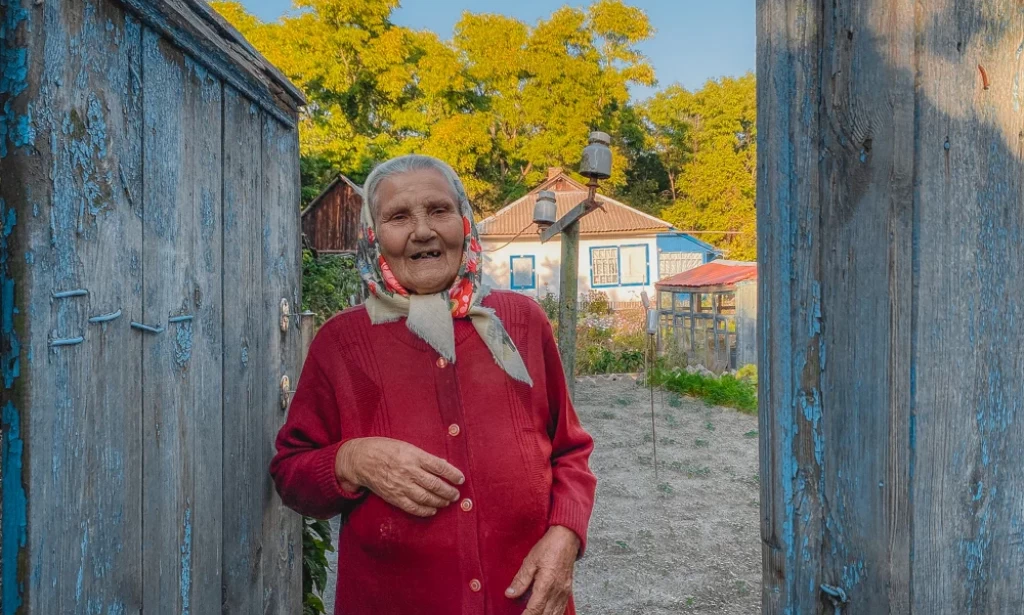
I think everyone born in the Soviet Union knows firsthand about the tragedy that happened on April 26, 1986 at the nuclear power plant in Chernobyl. About 35 years have passed since then. All residents of the 30-kilometer exclusion zone were forcibly resettled. Since then nature has been managing this land.
Free Trade Signals.
Many former residents of these villages have repeatedly tried to return to their homes, but they were caught and kicked out of the exclusion zone again. At some point the fight against such squatters stopped, because it was the elderly people for whom this land was native - more than one generation grew up here, and they were not going to leave their homes and abandon their farms.
The returnees simply don't see a threat in radioactive contamination. As the locals explain to me, during WWII they saw the enemy and understood the threat, but radiation is invisible, and if you can't see it, there is no threat, and their native land is simply stolen.
We have come a long way to the Chernobyl Exclusion Zone to show you how one of the few remaining Samosels lives on this contaminated land.
After passing through several checkpoints where police officers carefully check all the documents, we finally arrive at the so-called "thirty" - the name of the thirty-kilometer zone of forced eviction.
After just 15 minutes of driving along the deserted road, we arrive in the town of Chernobyl. Before the accident, about 13,000 people lived here. Now the population of Chernobyl is about 1,500 people. Most of them are employees of institutions and enterprises of the exclusion zone, employees of the national police and workers of the plant. All of them work here on a rotational basis: 13 days - in the zone, 14 - at home.
There are also about 70 Samoselts living in and around the town who live here permanently, only occasionally going outside the exclusion zone, for example to get their pensions or for other important matters.
Today we are going to visit one of these samosels who has lived here all her life, which is about 90 years on the outskirts of Chernobyl.
We drive for a long time through the overgrown streets of the former town, which reminds me more of a wild jungle, from which the black windows of abandoned houses sometimes peep out.
We leave our car at the end of the street and go to visit my grandmother. By the way, we, of course, informed her of our visit in advance by phone. Surprisingly, the reception here is excellent.
Of course, we did not go there empty-handed. It is not usual here, so before we went to visit we bought cereals, pasta, tea, and sweets. We also took some slices of fresh sausage and household items - all this will come in handy for grandma in everyday life and she won't have to go to the store unnecessarily.
An interesting fact: you can only get to Grandma's house from another street, next door, through someone else's house, where no one has lived for a long time. Since her house is on the edge of the ravine, and the street itself - at the bottom of it, it is more convenient to walk through the neighbors, and they do not mind - because they are simply not here.
Passing the apple orchards and thickets of wild grapes, we approach the gate, at which we are greeted by a smiling and cheerful grandmother. Meet: the heroine of our story today - Baba Masha (the name has been changed, as the local administration is a pain in the ass).
The smiling and cheerful old lady, who looks only 70 years old, it turns out, has been living here for almost 90 years! Several generations of her family grew up in this house, so even after the accident at the Chernobyl nuclear power plant, she came back to live here, in her homeland and lives here alone to this day.
Radiation does not prevent Baba Masha annually grow quite a good harvest in her vegetable garden, but about that a little later.
The house looks very cozy and the grounds are well-groomed. Granny does everything herself, even painted window frames that year, as local workers asked for help in painting a few thousand hryvnia, which, understandably, Granny did not have.
She had to paint the frames herself, and where she could not because of her height and age, she asked the visiting tourists, who occasionally drop in on her, to help.
What is interesting: the wood grandmother brings zone staff, and, free of charge, but dumped them out far beyond the yard, so you have to drag them on your hump, after which a long and tediously chop.
Firewood, of course, is not enough, so sometimes you have to order it for money, but that is a separate story.
Now let's go into the house, where we are invited together with you good grandmother samoselka.
Once inside, you are amazed at the cleanliness in every room! Every item is neatly in its place. In the kitchen, the old radio plays softly. Every object, be it a painting, plates, or television, is neatly covered with a cloth.
There is not a hint of dust or dirt in the huge, by one person's standards, three-room house, although Grandma walks inside in street shoes. Inside it smells pleasantly of the flowers that Grandma Masha grows in her own vegetable garden.

You must be logged in to post a comment.