
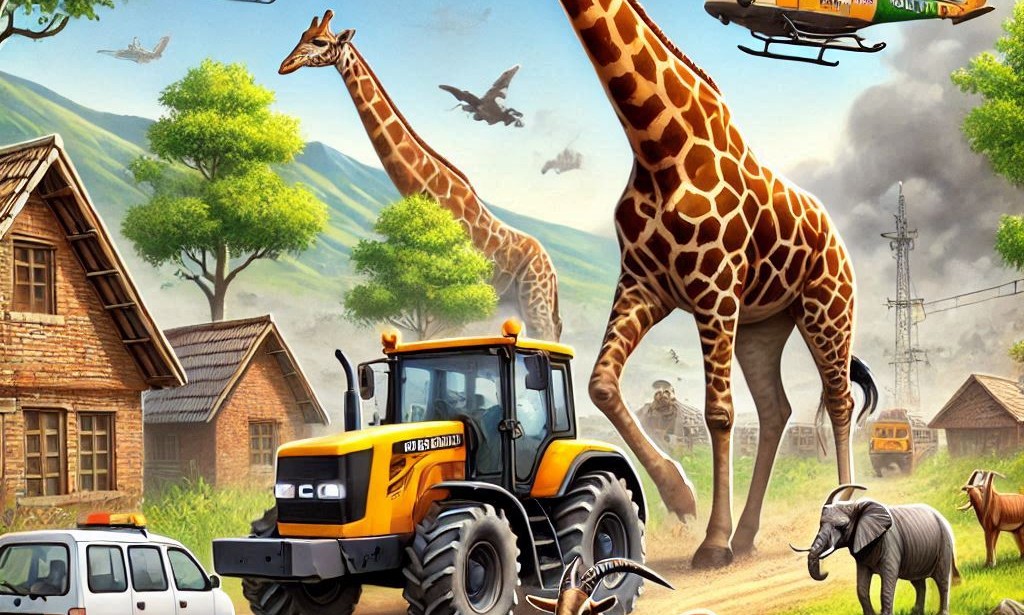
Top 10 Fascinating Facts About Giraffes
Giraffes, with their long necks and towering height, are one of nature's most iconic creatures. Known for their gentle demeanor and unique appearance, they are the world's tallest land animals. Below are ten fascinating facts about giraffes that highlight their extraordinary traits and behaviors.
---
1. Tallest Land Mammals
Standing at an average height of 14 to 19 feet (4.3 to 5.8 meters), giraffes are the tallest land animals. Males, known as bulls, can grow taller than females, reaching up to 18 feet. Their height gives them a unique advantage in spotting predators and accessing food in tall trees.
---
2. Specialized Neck Anatomy
Despite having necks that can be up to 6 feet long, giraffes have the same number of neck vertebrae as humans—seven. However, their vertebrae are elongated and connected by flexible joints, allowing their long necks to remain strong and mobile.
---
3. Unique Patterns
No two giraffes have the same coat pattern. Their spots, much like human fingerprints, are unique to each individual. These patterns not only provide camouflage but also help in regulating body temperature by dissipating heat through the patches.
---
4. Incredible Heart Power
A giraffe’s heart is about 2 feet long and weighs approximately 25 pounds. It is one of the most powerful hearts in the animal kingdom, pumping blood up their long necks to their brains. To maintain adequate blood flow, their blood pressure is roughly twice that of an average human.
---
5. Remarkable Tongues
Giraffes have prehensile tongues that are about 18-20 inches long. These tongues are dark bluish-purple, helping protect them from sunburn while they spend hours reaching for leaves. Their tongues are incredibly strong, capable of stripping leaves from thorny trees like acacias.
---
6. Diet and Feeding Habits
Giraffes are herbivores, primarily feeding on the leaves, flowers, and fruits of trees and shrubs. A single giraffe can consume up to 75 pounds of vegetation daily. Their height and long tongues enable them to reach food sources unavailable to most other herbivores.
---
7. Social Structure
Giraffes live in loose social groups called towers. These groups are fluid, often changing members. Unlike some animals, giraffes don’t form tight-knit family groups; they gather in herds for protection and social interaction.
---
8. Silent Communicators
For a long time, giraffes were thought to be almost silent. However, recent studies reveal that they communicate through low-frequency hums, especially at night. These sounds are inaudible to humans and may serve as a way to maintain group cohesion.
---
9. Quick Runners
Despite their seemingly slow, graceful movements, giraffes are surprisingly fast. They can run at speeds of up to 35 miles per hour over short distances and maintain a steady pace of 10 miles per hour for longer durations. Their long legs allow them to cover vast distances with ease.
---
10. Conservation Status
Giraffes are currently listed as vulnerable by the International Union for Conservation of Nature (IUCN). Habitat loss, poaching, and human-wildlife conflict threaten their populations. Conservation efforts are underway to protect these gentle giants and their ecosystems.
---
Conclusion
Giraffes are not just unique because of their height; their physiology, behavior, and adaptations make them one of the most fascinating creatures on Earth. Understanding and appreciating these
magnificent animals is key to ensuring their survival for future generations.

You must be logged in to post a comment.